
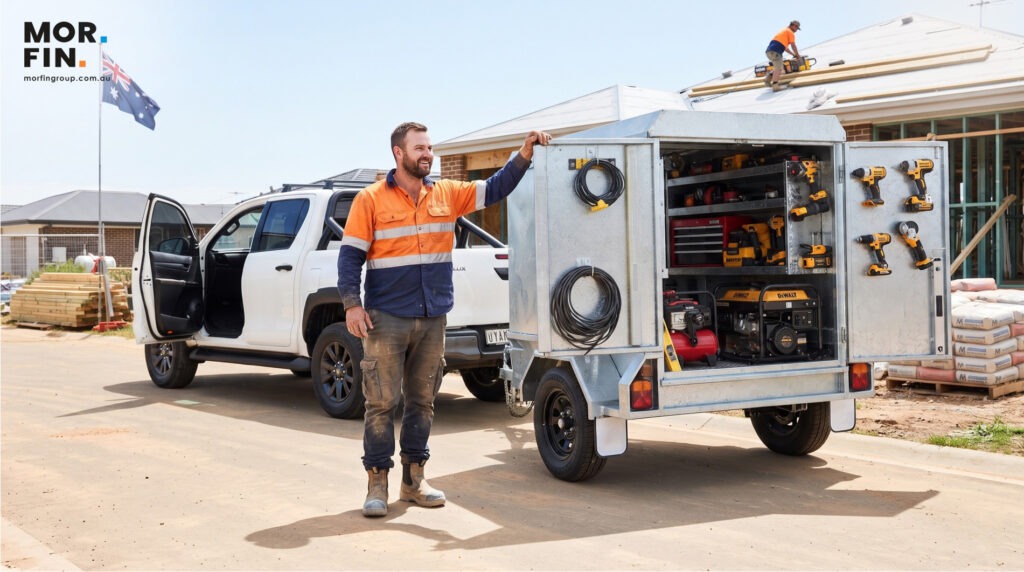
For tradies, having the right vehicle, tools and equipment can be essential to getting work done efficiently. But purchasing a ute, trailer or expensive equipment outright can tie up business cash flow.
Equipment finance can provide a way to spread the cost of eligible business-use assets through structured repayments, subject to lender requirements and your circumstances.
Whether you’re replacing an ageing work ute, purchasing new tools or adding a trailer to your business setup, understanding the available finance structures can help you assess the total cost before committing to a purchase.
What is equipment finance for tradies?
Equipment finance is a type of business finance used to fund eligible assets and equipment. For trades businesses, this may include vehicles, machinery, tools and other equipment used primarily for business purposes.
Depending on the asset and lender, finance may be available for:
- Utes and commercial vehicles
- Trailers
- Tools and trade equipment
- Excavators and bobcats
- Forklifts
- Specialist trade equipment
The finance structure, deposit requirements, loan term and available amount can vary between lenders and applications.
Tradie ute finance
A ute can be one of the most important assets for a trades business. Electricians, plumbers, builders, landscapers and other tradies may rely on their vehicles to transport tools, materials and equipment to different jobs.
Tradie ute finance may be available for eligible new or used vehicles, depending on the lender and vehicle.
Before applying, consider:
- Purchase price
- New or used vehicle
- Vehicle age and condition
- Deposit available
- Loan term
- Expected repayments
- Business use
- GST treatment
- Balloon payment, if applicable
- Insurance and registration costs
A lower monthly repayment doesn’t necessarily mean a lower overall finance cost. A longer loan term can reduce the regular repayment while increasing the total interest paid over the life of the finance.
Can tradies finance tools and equipment?
Yes, depending on the asset and lender criteria.
Tools and equipment can represent a significant investment, particularly for trades that require specialised machinery or high-value equipment.
Examples may include:
- Power tools
- Welding equipment
- Compressors
- Generators
- Tile-cutting equipment
- Surveying equipment
- Concrete equipment
- Workshop machinery
- Diagnostic equipment
- Specialist construction equipment
Whether a particular item can be financed depends on factors such as the asset, purchase price, supplier, finance structure and lender policy.
For lower-value tools, a different form of business finance may sometimes be more appropriate than dedicated equipment finance.
Trailer finance for tradies
A trailer can increase the amount of equipment or materials a tradie can transport to a job site.
Depending on its intended use and lender criteria, finance may be available for trailers such as:
- Box trailers
- Enclosed trailers
- Plant trailers
- Tandem trailers
- Tipping trailers
- Trade trailers
- Custom-built trailers
The type and value of the trailer, its intended business use and the applicant’s financial circumstances can affect the available finance options.
If you’re purchasing a trailer together with a ute or other equipment, it’s worth considering whether the assets should be financed together or separately.
What types of equipment can tradies finance?
Equipment finance isn’t limited to basic tools.
Depending on lender requirements, tradies may be able to finance a wide range of business-use assets, including:
| Asset | Examples |
|---|---|
| Vehicles | Utes, vans, trucks and commercial vehicles |
| Trailers | Enclosed, plant, tipping and trade trailers |
| Construction equipment | Excavators, bobcats and compact machinery |
| Workshop equipment | Compressors, generators and machinery |
| Trade tools | Power tools and specialist equipment |
| Landscaping equipment | Mowers, chippers and related machinery |
| Electrical equipment | Specialist testing and installation equipment |
| Plumbing equipment | Drain equipment and specialist tools |
Asset eligibility varies between lenders, so not every asset will qualify under every finance product.
Which equipment finance structure should you use?
There isn’t one finance structure that suits every tradie or every asset. Depending on the circumstances, options may include
Chattel mortgage
A chattel mortgage can be used to finance eligible business assets, with the asset generally used as security for the finance. Under a chattel mortgage, the business generally owns the asset while the financier holds a security interest over it until the finance is repaid..
Hire purchase
Under a hire purchase arrangement, the financier generally owns the asset during the finance term, with ownership transferring to the business once the contractual obligations are completed.
Finance lease
A finance lease involves the financier purchasing the asset and leasing it to the business for an agreed term. The end-of-term options depend on the lease arrangement.
The availability and tax treatment of each structure can vary. An accountant or tax adviser can help you understand the tax and GST implications for your business.
Should you buy equipment outright or use finance?
Paying cash means you don’t take on finance repayments or interest charges, but it can also reduce the amount of working capital available to your business.
Equipment finance can allow you to spread the purchase cost over time, potentially preserving cash for wages, materials, operating expenses or other business needs.
Whether paying cash or using finance is appropriate depends on your cash position, the asset’s expected useful life, business cash flow and the cost of the finance.
Before deciding, compare the total purchase cost and total finance cost, the amount of cash you would retain, the expected monthly or periodic repayments, the asset’s expected lifespan and business use, and any other upcoming business expenses.
How much can a tradie borrow for equipment?
There isn’t one standard borrowing amount for all tradies.
A lender may consider:
- Business turnover and income
- Time in business
- Personal or business financial commitments
- Credit history
- Deposit or contribution
- Type and value of the asset
- Age and condition of the equipment
- Proposed loan term
- Overall ability to service the finance
Established businesses and newer businesses may also have different lending requirements.
A finance broker can help you understand which information and documentation may be required before submitting an application.
Can sole traders get equipment finance?
Sole traders may be able to apply for equipment finance for eligible business-use assets.
Lenders can assess the applicant’s overall financial position, which may include business income, personal income, existing debts and other financial commitments.
Self-employed applicants may need to provide additional documentation to demonstrate income and business performance.
Requirements vary between lenders, so being a sole trader doesn’t automatically determine whether finance will or won’t be available.
Can tradies finance used equipment?
Used equipment can sometimes be financed, subject to lender requirements.
The age, condition, value and type of asset can affect the available finance options. Some lenders may have restrictions on older equipment or particular asset categories.
For a used ute or trailer, buyers should also consider the asset’s condition, service history, registration and any inspection requirements before committing to the purchase.
What documents do tradies need for equipment finance?
The documents required depend on the applicant, lender and finance amount.
You may be asked for:
- Identification
- ABN and business details
- Bank statements
- Business financial statements
- Tax returns
- Proof of income
- Details of existing debts
- Asset and liability information
- A quote or invoice for the equipment
Self-employed or newer businesses may need to provide additional information.
Having the relevant documents ready can help make the application process more straightforward.
What should you consider before financing equipment?
Equipment finance should be considered as part of the wider business budget. Before committing, think about:
Cash flow
Can the business comfortably manage the repayments alongside wages, materials, rent and other operating costs?
Asset productivity
Will the equipment help the business complete more work or operate more efficiently?
Useful life
Does the finance term make sense compared with how long you expect to use the asset?
Total cost
Consider interest, fees, balloon payments and other costs rather than looking only at the advertised rate.
Tax and GST
The tax treatment of equipment purchases and finance structures can vary. Obtain advice from your accountant or tax adviser based on your circumstances.
How MorFin Group can help with tradie equipment finance
Choosing equipment finance involves more than finding a way to fund the purchase.
MorFin Group can help tradies explore finance options for eligible utes, trailers, tools, machinery and other business-use equipment.
With access to more than 25 banks and lending institutions, we can help you understand relevant finance structures, repayments and lender requirements based on your circumstances.
The appropriate finance option will depend on the asset, business position, loan structure and lender assessment.
Conclusion
For tradies, vehicles, tools, trailers and machinery can be important business assets, but purchasing them outright isn’t always the only option.
Equipment finance can help spread the cost of eligible assets over an agreed period, subject to lender requirements and your circumstances.
Before choosing finance, consider the total cost, repayment structure, asset lifespan, business cash flow and any tax or GST implications.
If you’re considering tradie ute finance, trailer finance or equipment finance, MorFin Group can help you understand the available options and work through the numbers before committing to a purchase.
FAQs
Q1. What is equipment finance for tradies?
Equipment finance is business finance used to fund eligible vehicles, machinery, tools and other business-use assets. The available finance structure depends on the asset, lender and applicant’s circumstances.
Q2. Can I get tradie ute finance?
Finance may be available for eligible new or used utes used for business purposes. Lender requirements can vary based on the vehicle, applicant and finance structure.
Q3. Can I finance tools for my trade business?
Potentially. Certain tools and specialist trade equipment may be eligible for equipment finance, subject to the lender’s asset and lending criteria.
Q4. Can I finance a trailer?
Yes, eligible trailers may be financed depending on their type, value, intended use and lender requirements.
Q5. Can sole traders get equipment finance?
Sole traders may be able to obtain equipment finance for eligible business-use assets. Lenders will generally assess the applicant’s overall financial position and ability to service the finance.
Q6. Can I finance used equipment?
Used equipment may be eligible for finance. The asset’s age, condition, value and type can affect the available options.
Q7. How much can I borrow for equipment finance?
There is no standard borrowing amount. The amount available depends on factors including the asset value, business position, income, existing commitments and lender assessment.
Q8. What equipment can tradies finance?
Depending on lender requirements, finance may be available for utes, trailers, machinery, specialist tools, generators, compressors, workshop equipment and other eligible business-use assets.
Q9. What is the difference between a chattel mortgage and hire purchase?
A chattel mortgage generally allows the business to own the asset while the financier holds a security interest. Under hire purchase, the financier generally owns the asset during the term, with ownership transferring after the contractual obligations are completed.
Q10. Should I finance equipment or pay cash?
This depends on your business’s cash position, the cost of finance, expected asset use and other financial commitments. Comparing the total cost and effect on cash flow can help inform the decision.
Q11. Can a mortgage broker help with equipment finance?
Some mortgage and finance brokers also assist with business and asset finance. MorFin Group can help clients explore relevant equipment finance options through its lender panel, subject to lender requirements.
Q12. What documents are needed for equipment finance?
Requirements vary, but lenders may request identification, business details, financial information, bank statements, existing debt details and a quote or invoice for the asset.